
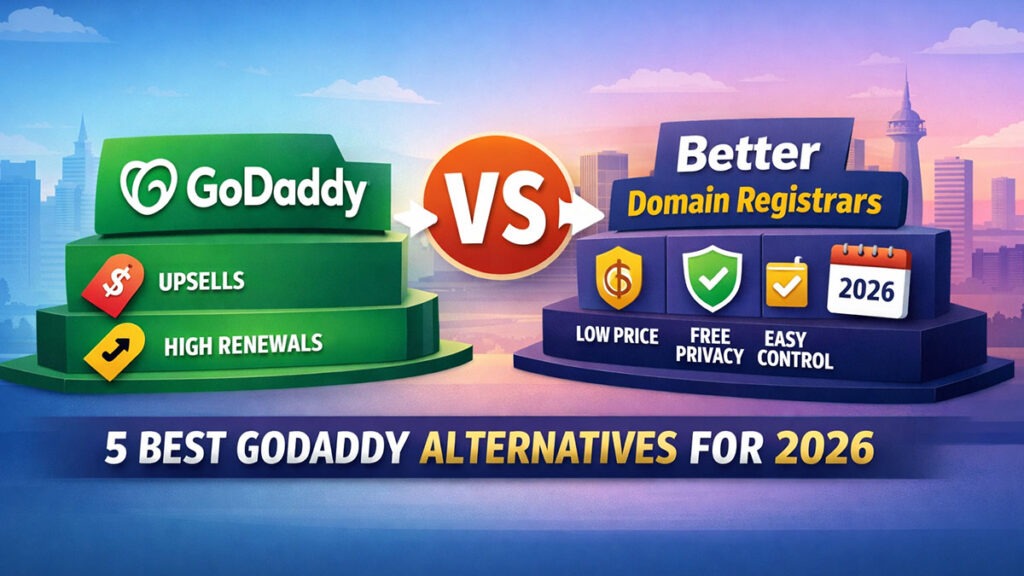
You buy a domain from GoDaddy for ₹99 or $0.99 and feel like you’ve cracked a deal.
Then the renewal email arrives.
Suddenly, that “cheap” domain costs 10x more, and you’re staring at a checkout page packed with upsells you never asked for. Privacy protection? Extra. Email? Extra. Security add-ons you don’t fully understand? Also extra.
If this sounds familiar, you’re not alone.
GoDaddy is popular because it was early and everywhere. But popularity doesn’t always mean it’s the best—especially when it comes to domain registration. Over the years, many bloggers, affiliate marketers, and site owners have started looking for a GoDaddy alternative domain registration service that’s simpler, cheaper in the long run, and easier to manage.
And here’s the good news.
You’re not stuck.
Today, there are several domain registrars that offer:
In this guide, we’ll look at the best GoDaddy alternatives for domain registration, compare them honestly, and help you choose the right one based on your needs—not marketing noise.
Whether you’re registering your first domain or thinking about transferring away from GoDaddy, this post will make the decision easier.
Why You Might Need a GoDaddy Alternative for Domain Registration
Switching away from GoDaddy isn’t about hating the brand.
It’s about realizing that better options exist—especially once you’ve been around the block a few times.
Here are the most common reasons people start looking for a GoDaddy alternative domain registration service.
1. Renewal Prices Hurt (A Lot More Than You Expect)
The first-year price looks attractive. No argument there.
But renewals?
That’s where things get uncomfortable.
Many users register a domain cheaply, forget about it for a year, and then renew on autopilot—only to realize they’re paying 2–5x more than what other registrars charge every single year.
Over time, that adds up. Especially if you own multiple domains.
2. WHOIS Privacy Isn’t Always Free
WHOIS privacy is no longer a “premium” feature.
Most modern registrars include it by default.
GoDaddy? Often not.
So you either:
Neither feels great.
3. Too Many Upsells, Too Little Clarity
Registering a simple domain shouldn’t feel like navigating a supermarket checkout aisle.
But with GoDaddy, you’re constantly nudged toward:
For beginners, this creates confusion. For experienced users, it’s just annoying.
4. Dashboard Overload
Once you own more than one domain, things get messy.
The dashboard tries to do everything—hosting, email, marketing tools—and ends up doing domain management poorly. Simple tasks like DNS edits or nameserver changes can feel more complicated than they should be.
A good GoDaddy alternative keeps domain control focused and clean.
5. Support Can Be Hit-or-Miss
Sometimes support is helpful.
Sometimes it’s scripted and slow.
When your domain is involved—something that literally controls your website and email—you want fast, clear answers, not a maze of redirects.
The point isn’t that GoDaddy is unusable.
It’s that once you compare it with modern registrars, you start wondering why you’re paying more… for less.
What to Look for in a Good GoDaddy Alternative
Not every domain registrar is automatically better just because it’s cheaper.
Some save you money upfront but create headaches later. Others look clean on the surface but hide limitations once you say “buy.”
So before switching, here’s what actually matters when choosing a GoDaddy alternative for domain registration.
Transparent Pricing (Especially Renewals)
Ignore the flashy first-year discount for a moment.
What you really want to check is:
A good registrar is upfront about costs and doesn’t rely on “surprise renewals” to make money.
Free WHOIS Privacy (Non-Negotiable in 2026)
Your domain registration shouldn’t expose:
Free WHOIS privacy should be included by default—not sold as an annual add-on. Most modern GoDaddy alternatives get this right.
Simple DNS Management
You don’t need advanced tools every day.
But when you do need to:
…it should take minutes, not a tutorial video.
Clean DNS control is a big quality signal.
No Pushy Upsells
The best domain registrars let you:
If every click tries to sell you something else, that’s a red flag—especially for beginners.
Clean, Focused Dashboard
Domain management should feel boring—in a good way.
You should be able to:
If the dashboard feels cluttered, it only gets worse as your domain portfolio grows.
Reliable Support (When You Actually Need It)
Most of the time, you won’t need support.
But when something goes wrong—expired domain, transfer issue, DNS confusion—you want:
Even basic email support is fine, as long as it’s competent.
Choosing the right GoDaddy alternative isn’t about chasing the cheapest price.
It’s about finding a registrar that respects your time, respects your privacy, and doesn’t punish you for staying long-term.
Best GoDaddy Alternative Domain Registration Services (2026)
1. Namecheap – Best Overall GoDaddy Alternative
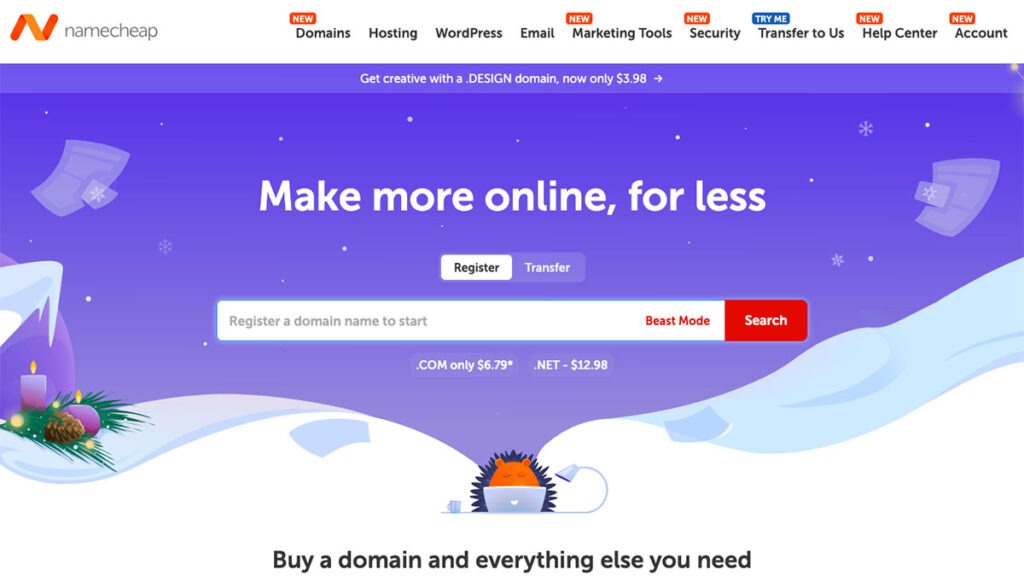
If you ask bloggers what they switched to after GoDaddy, Namecheap is usually the first name that comes up.
And honestly, it’s not hype.
Namecheap gets the basics right — fair pricing, free privacy, and a dashboard that doesn’t fight you.
Why Namecheap Works So Well
The biggest win with Namecheap is predictability.
You know what you’re paying when you register a domain, and you’re not shocked a year later when it’s time to renew. Renewal prices are reasonable, clearly shown upfront, and don’t rely on dark patterns.
WHOIS privacy is free for life, which alone saves you money every single year compared to GoDaddy.
Domain Management Experience
This is where many GoDaddy users feel instant relief.
Everything is where you expect it to be. No digging. No clutter.
If you’re running a blog, niche site, or affiliate project, this matters more than fancy features you’ll never use.
Pros
Cons
If you want a safe, proven GoDaddy alternative for domain registration, Namecheap is the easiest recommendation. It’s simple, affordable long-term, and doesn’t overcomplicate things.
2. Cloudflare Registrar – Cheapest Renewals (No Markups)
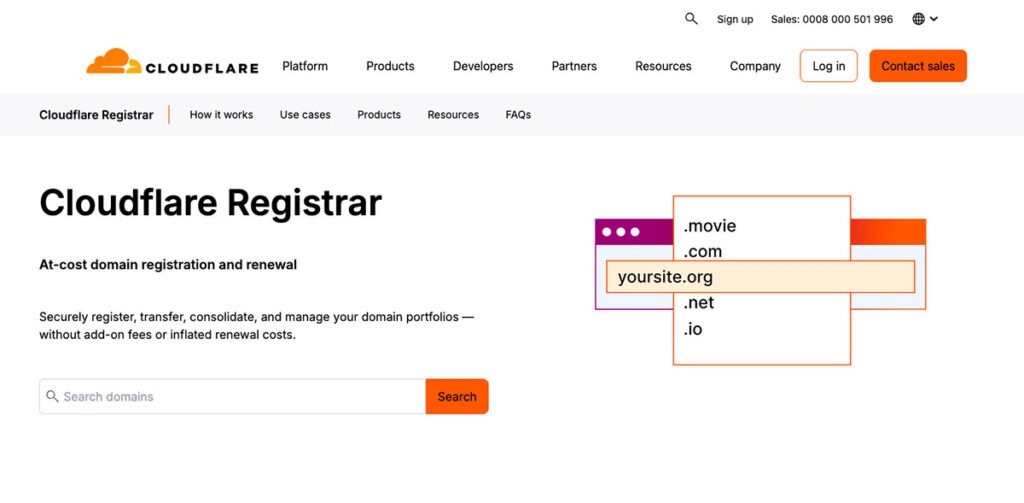
If your biggest frustration with GoDaddy is renewal pricing, Cloudflare Registrar feels like a breath of fresh air.
Why?
Because Cloudflare doesn’t play the markup game at all.
You pay the actual wholesale price of the domain. Nothing more.
Why Cloudflare Registrar Is Different
Most registrars make their real money on renewals.
Cloudflare doesn’t.
They sell domains at cost and make money from their other products. That means:
What you see is what you pay—every year.
Domain Management Experience
Cloudflare’s interface is clean, fast, and built for performance-focused users.
DNS changes propagate incredibly fast, and everything is tightly integrated with Cloudflare’s network. If you already use Cloudflare for CDN or security, managing domains here feels seamless.
That said, this isn’t a “hand-holding” platform.
Pros
Cons
If you care more about long-term cost and stability than beginner-friendly hand-holding, Cloudflare Registrar is hard to beat. Just be comfortable managing DNS through Cloudflare.
3. Porkbun – Underrated but Incredible Value
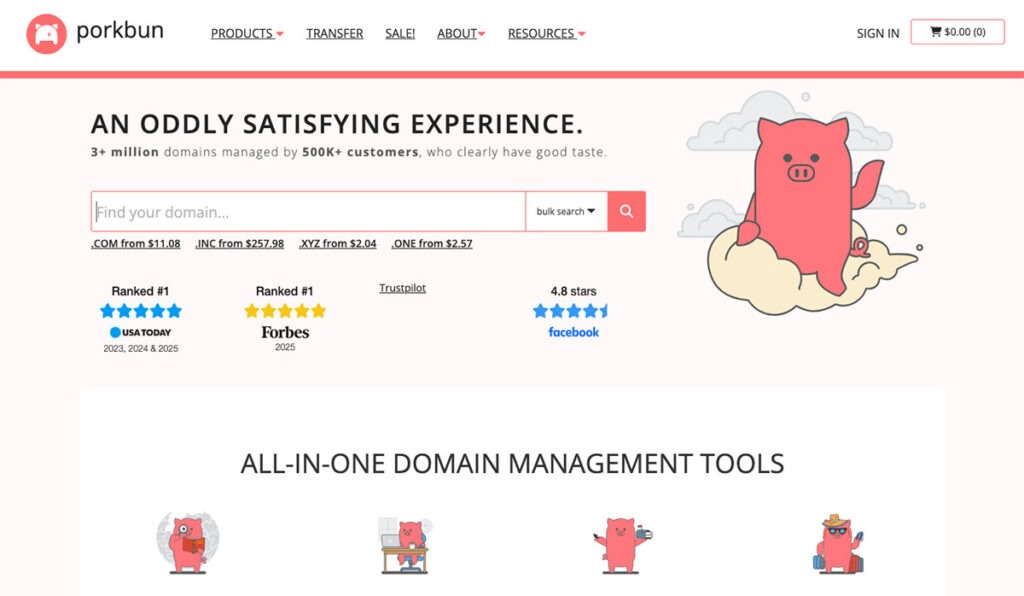
Porkbun doesn’t spend much on flashy ads.
Instead, it quietly wins people over with honest pricing, free extras, and a refreshingly human approach to domain registration.
If GoDaddy feels too salesy and Cloudflare feels too technical, Porkbun often lands right in the sweet spot.
Why Porkbun Stands Out
Porkbun’s biggest strength is how much it includes by default.
You’re not constantly asked to upgrade or add-ons just to get basic features. Things that cost extra elsewhere—Porkbun often bundles them in without drama.
It feels like a registrar built by people who actually use domain registrars.
Domain Management Experience
The dashboard is clean and surprisingly intuitive.
DNS management is straightforward, domain settings are easy to find, and the interface avoids the clutter you see in bigger brands. It’s beginner-friendly, but not dumbed down.
For most bloggers, that’s the perfect balance.
Pros
Cons
Porkbun is one of the most underrated GoDaddy alternative domain registration services right now. It’s honest, affordable, and refreshingly simple—without feeling barebones.
4. Squarespace Domains – Clean, Simple, and Beginner-Friendly
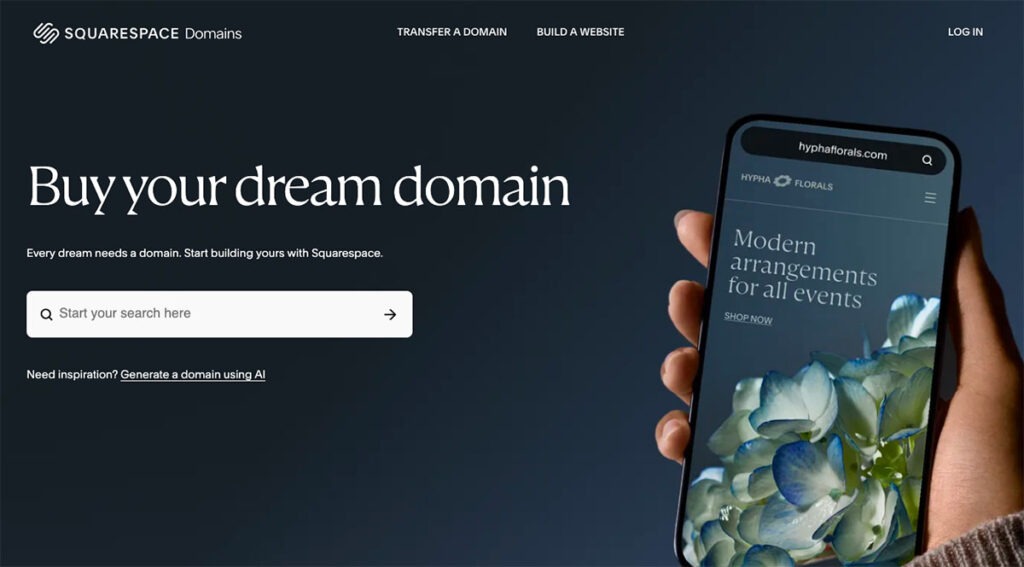
If cluttered dashboards stress you out, this one will feel… calm.
After acquiring Google Domains, Squarespace Domains carried forward what people loved most: simplicity. No noise. No aggressive selling. Just domain registration that does what it’s supposed to do.
Why Squarespace Domains Appeals to Beginners
The biggest strength here is focus.
You won’t find dozens of upsells or confusing options. The interface is stripped down to essentials, which makes it easy for beginners to register and manage a domain without second-guessing every click.
If you liked Google Domains before, this feels familiar.
Domain Management Experience
Domain management is straightforward and uncluttered.
DNS settings are clearly laid out, WHOIS privacy is included, and common tasks like renewals or transfers don’t require hunting through menus.
That said, this simplicity comes with limits.
Power users may find it too basic.
Pros
Cons
Squarespace Domains is a solid GoDaddy alternative for domain registration if you value clean design and simplicity more than advanced features or rock-bottom pricing.
5. Dynadot – Great for Bulk & Long-Term Domain Buyers
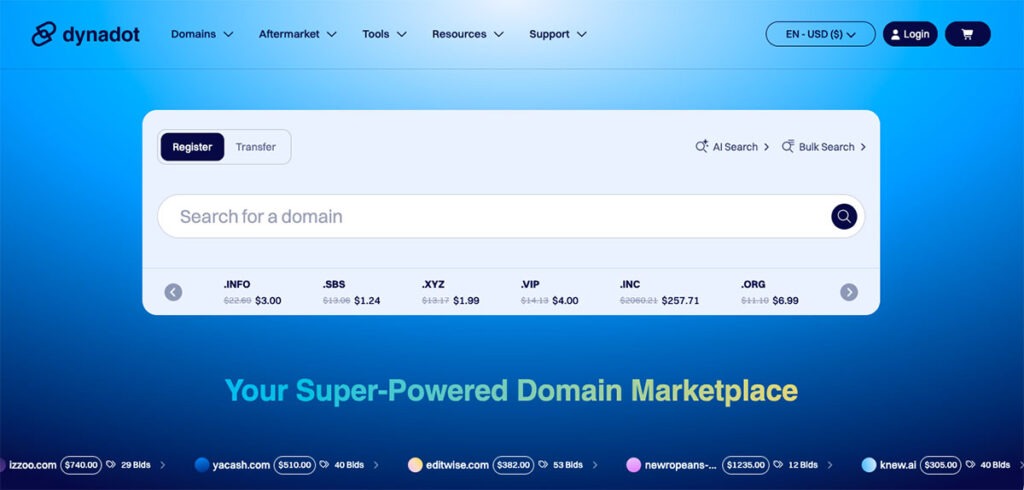
Dynadot doesn’t try to impress you with flashy design or aggressive marketing.
Instead, it focuses on control, flexibility, and long-term value—which is exactly why it’s popular among people who manage lots of domains.
If GoDaddy feels bloated and restrictive, Dynadot feels refreshingly straightforward.
Why Dynadot Appeals to Power Users
Dynadot shines when you go beyond owning just one or two domains.
It offers:
The more domains you manage, the more Dynadot starts to make sense.
Domain Management Experience
The interface isn’t the prettiest—but it’s functional and fast.
Everything is logically organized, and once you get used to it, managing multiple domains becomes efficient. You won’t find unnecessary upsells or distractions here.
This is a “get things done” dashboard.
Pros
Cons
Dynadot is a strong GoDaddy alternative domain registration service if you value control, scalability, and long-term savings over fancy design or beginner hand-holding.
GoDaddy vs Alternatives: Quick Comparison
If you don’t want to read every detailed review, this section makes things simple.
Here’s how GoDaddy stacks up against the most popular GoDaddy alternative domain registration services we covered above—based on what actually matters long term.
| Registrar | Renewal Pricing | WHOIS Privacy | Upsells | Ease of Use | Best For |
|---|---|---|---|---|---|
| GoDaddy | ❌ High after Year 1 | ❌ Paid add-on | ❌ Aggressive | ⚠️ Cluttered | Short-term registrations |
| Namecheap | ✅ Fair & predictable | ✅ Free (lifetime) | ✅ Minimal | ✅ Beginner-friendly | Bloggers & affiliates |
| Cloudflare Registrar | ✅ At-cost (cheapest) | ✅ Free | ✅ None | ⚠️ Technical | Long-term owners |
| Porkbun | ✅ Reasonable | ✅ Free | ✅ None | ✅ Easy | Budget-focused users |
| Squarespace Domains | ✅ Transparent | ✅ Free | ✅ None | ✅ Very simple | Beginners |
| Dynadot | ✅ Competitive | ⚠️ Partial | ✅ Minimal | ⚠️ Learning curve | Bulk domain buyers |
If you already know which registrar fits your needs, it’s a good idea to check today’s pricing and domain availability before someone else grabs your name.
Which GoDaddy Alternative Is Best for You?
There’s no single “best” registrar for everyone.
The right GoDaddy alternative for domain registration depends on how you plan to use your domain, how technical you are, and how long you plan to keep it.
Here’s a quick, no-nonsense breakdown.
If You’re a Beginner or Registering Your First Domain
Go with Namecheap or Squarespace Domains.
Both offer:
Namecheap gives you more flexibility as you grow, while Squarespace Domains keeps things ultra-simple.
If You Care Most About Long-Term Cost
Choose Cloudflare Registrar.
It’s one of the few registrars that:
Just be comfortable managing DNS through Cloudflare.
If You Want the Best Value Without Complexity
Porkbun is a strong choice.
You get:
It’s great for bloggers who want value without feeling overwhelmed.
If You Manage Multiple Domains or Niche Sites
Look at Dynadot.
Dynadot shines when:
If You Just Want “Set It and Forget It”
Squarespace Domains fits well here.
It’s not the cheapest or the most powerful—but it’s calm, predictable, and beginner-safe.
Is It Safe to Transfer a Domain from GoDaddy?
Short answer: Yes.
And it’s far more common than you might think.
Thousands of domains are transferred away from GoDaddy every single day—to Namecheap, Cloudflare, Porkbun, and other registrars—without breaking websites or email.
Most of the fear around domain transfers comes from not understanding what actually happens.
So let’s clear that up.
What a Domain Transfer Really Means
When you transfer a domain, you’re only changing the registrar.
You’re not:
Your domain continues to point to the same hosting and DNS settings unless you change them.
In other words, your site doesn’t suddenly disappear.
Will My Website or Email Go Down?
In almost all cases: no.
As long as:
Your website and email keep working normally during the transfer.
This is why many people transfer domains without visitors ever noticing.
How Long Does a Transfer Take?
Typically it takes 5 to 7 days from start to finish.
Sometimes faster. Rarely longer.
During this time:
When You Can’t Transfer
There are a few simple rules:
If those conditions are met, you’re good to go.
Transferring a domain from GoDaddy to a better registrar is safe, routine, and reversible if done correctly. It’s not a risky move—it’s just administrative housekeeping.
How to Transfer Your Domain from GoDaddy (Step by Step)
Transferring a domain sounds technical, but in reality, it’s mostly clicking a few buttons and waiting.
Here’s the simplest way to move your domain from GoDaddy to a GoDaddy alternative domain registration service.
Step 1: Unlock Your Domain in GoDaddy
Log in to your GoDaddy account and open your domain settings.
This allows the transfer to proceed.
Step 2: Get the Authorization (EPP) Code
Still inside GoDaddy:
This code is required by the new registrar.
Step 3: Start the Transfer at Your New Registrar
Go to the registrar you’re moving to (Namecheap, Porkbun, Cloudflare, etc.).
Pay the transfer fee (this usually adds one year to your domain).
Step 4: Confirm the Transfer Email
You’ll receive a confirmation email.
This step is important—don’t skip it.
Step 5: Wait for the Transfer to Complete
Now comes the easiest part: waiting.
That’s it.
Final Verdict: Should You Stick with GoDaddy or Switch?
GoDaddy isn’t “bad.”
It’s just no longer the best choice for most people.
If you registered a domain years ago and never looked elsewhere, it’s easy to keep renewing out of habit. But once you compare pricing, privacy, and usability, the cracks start to show.
For short-term or one-off domains, GoDaddy can still work.
But for bloggers, affiliate marketers, and anyone building something long-term, most GoDaddy alternative domain registration services offer better value.
Here’s the honest takeaway:
And the best part?
Switching registrars doesn’t mean downtime, lost SEO, or technical headaches—when done correctly, it’s boring in the best possible way.
Choosing a domain registrar isn’t about chasing the cheapest first-year deal.
It’s about predictable pricing, control over your domain, and peace of mind every time renewal season rolls around. If GoDaddy no longer checks those boxes, now you know your options—and you’re free to choose better.
You don’t need to switch today—but if GoDaddy’s renewals or upsells are bothering you, it’s worth checking a few alternatives and seeing which one feels right. A better registrar often saves money and frustration over time.
FAQs
Are GoDaddy alternatives really cheaper in the long run?
In most cases, yes.
GoDaddy often looks cheap in year one but becomes expensive at renewal—especially when you add WHOIS privacy. Most alternatives keep renewal pricing reasonable and include privacy for free, which makes them cheaper over time.
Will transferring my domain hurt SEO?
No.
Search engines don’t care which registrar you use.
As long as your domain name stays the same, and your DNS and hosting remain unchanged.
There is zero SEO impact from switching registrars.
Can I use one company for domains and another for hosting?
Absolutely—and many professionals do this on purpose.
You can:
– Buy domains from Namecheap, Porkbun, or Cloudflare
– Host your site anywhere you like
Registrar and hosting are completely independent.
Which registrar is best for SEO?
This is a common myth.
No registrar gives an SEO advantage.
What matters is:
– Site performance
– Content quality
– Hosting reliability
Choose a registrar based on price, control, and simplicity, not SEO promises.
Is WHOIS privacy really important?
Yes.
Without WHOIS privacy your email gets spammed, your phone number may get robocalls, and your address becomes public.
That’s why free WHOIS privacy is a big reason people look for GoDaddy alternatives.
Can I transfer my domain back to GoDaddy later?
Yes, if you really want to.
Domain transfers are reversible, as long as you follow the 60-day transfer rule. You’re never locked in permanently.